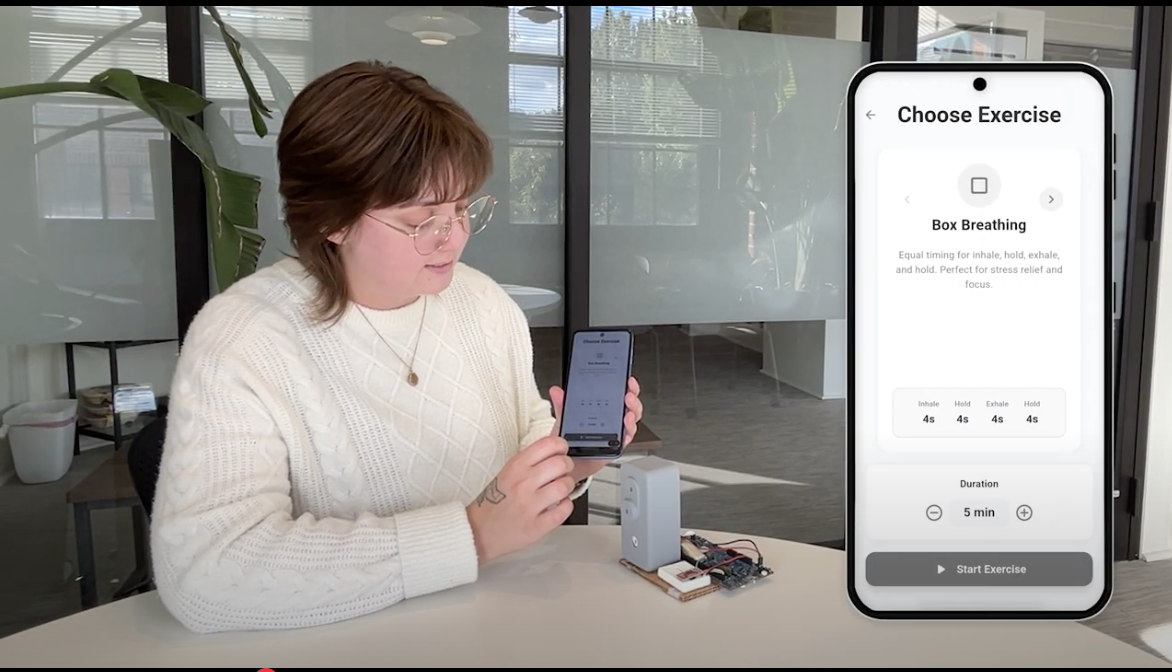
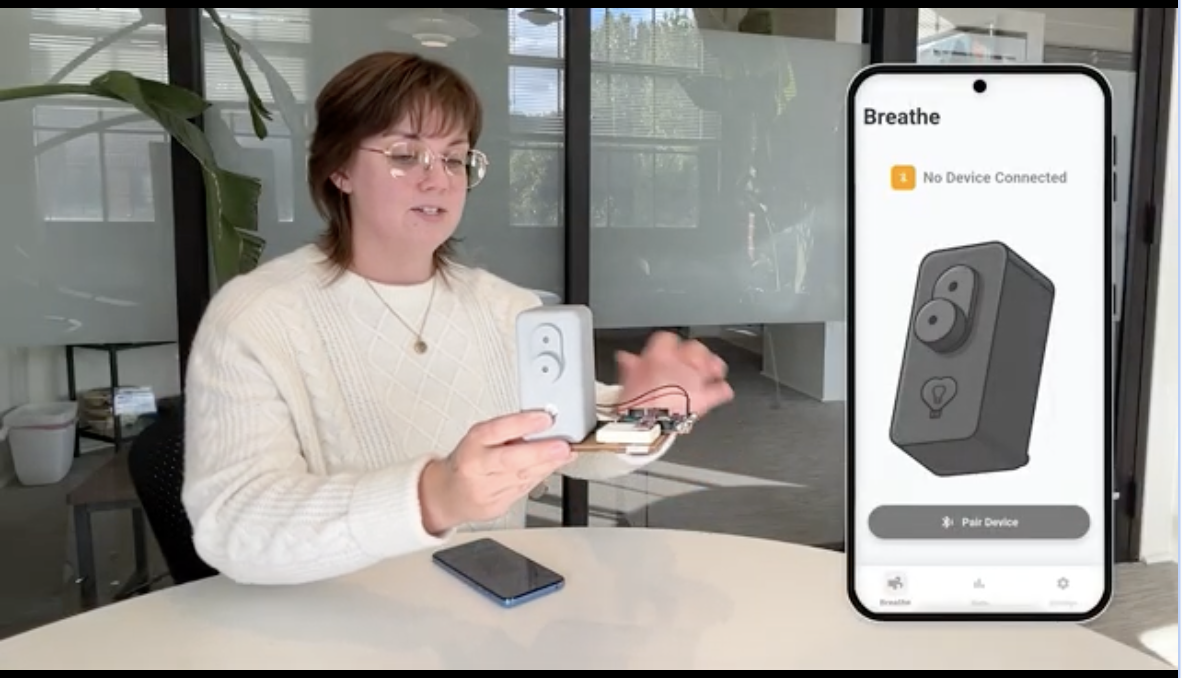
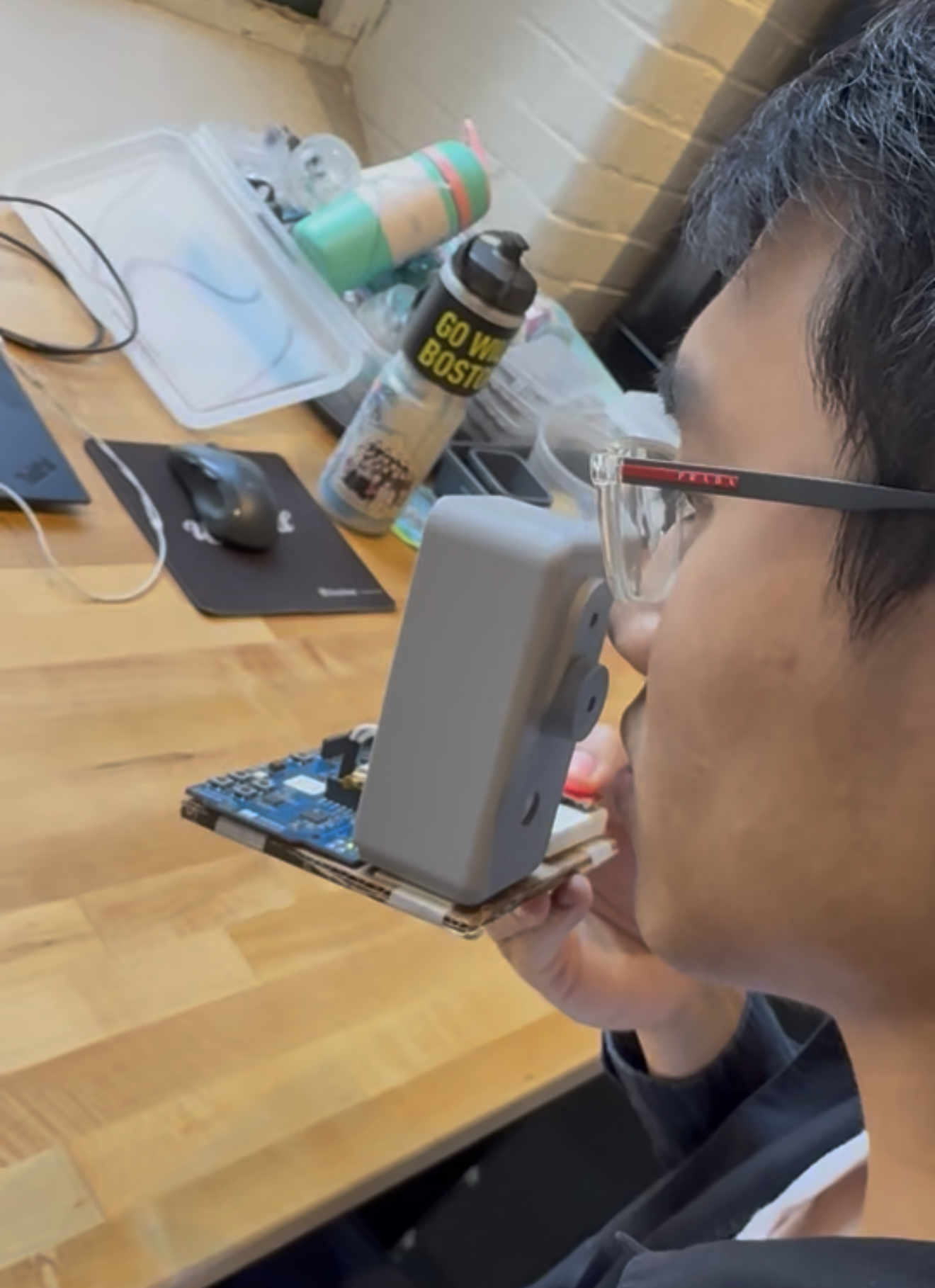
Hands-free. Screen-free. Studied with postpartum mothers at Women & Infants Hospital and published in peer-reviewed literature.
83% satisfaction measures acceptability — whether participants found it usable — not symptom improvement. 25% HRV increase in a single session confirms the device produces the intended physiological effect; HRV is a biomarker, not a clinical outcome.
Study design: single-arm prospective cohort, n=40, postpartum. No control group.
Be first in line when we launch. No spam, ever.
No referrals yet — share your link to move up.
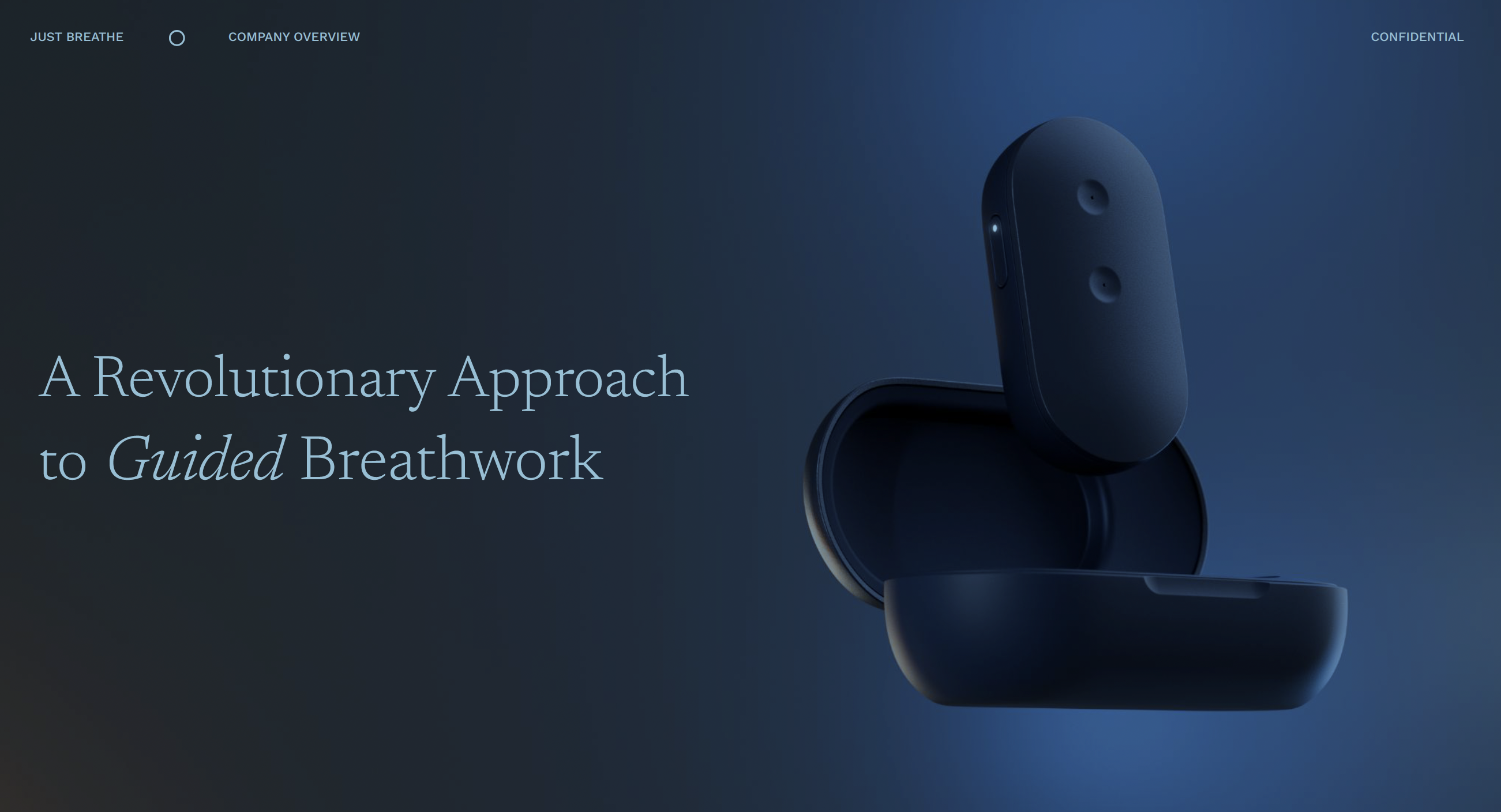
Designed to meet people where they are — with guidance that fits naturally into daily life.
Apps, CBT programs, and meditation all fail the same way — they need your attention, your hands, and a screen, exactly when you have none. Just Breathe is passive and screen-free. In our study, mothers used it while holding their newborn.
Built specifically for postpartum and high-intent populations. Tested at Women & Infants Hospital with postpartum participants.
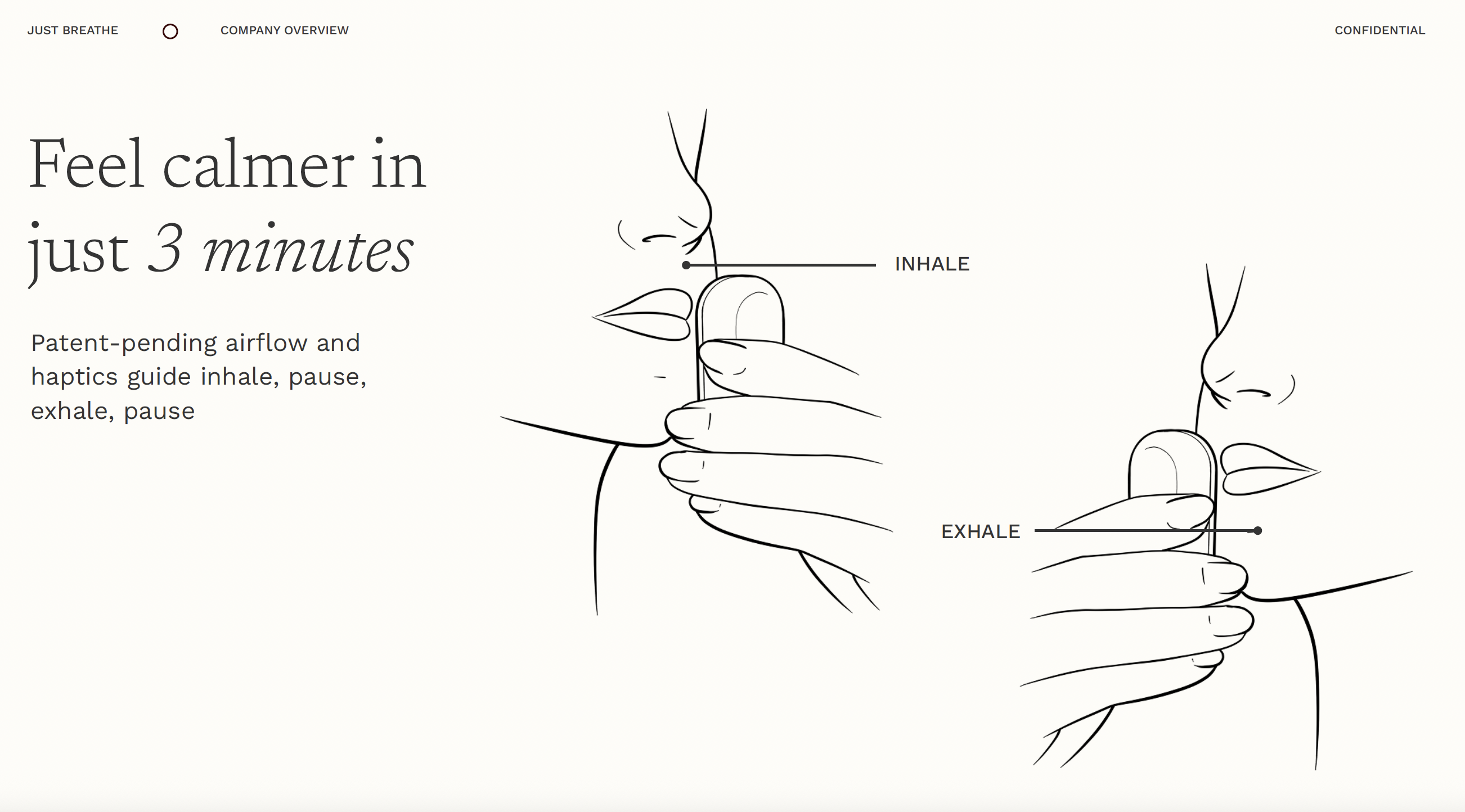
No learning curve — the device guides breathing automatically through patent-pending dual-nozzle airflow. The body follows. No added cognitive load.
Track physiological signals that help describe each session without presenting them as clinical outcomes.
A published single-arm prospective feasibility cohort with 40 postpartum participants at Women & Infants Hospital.
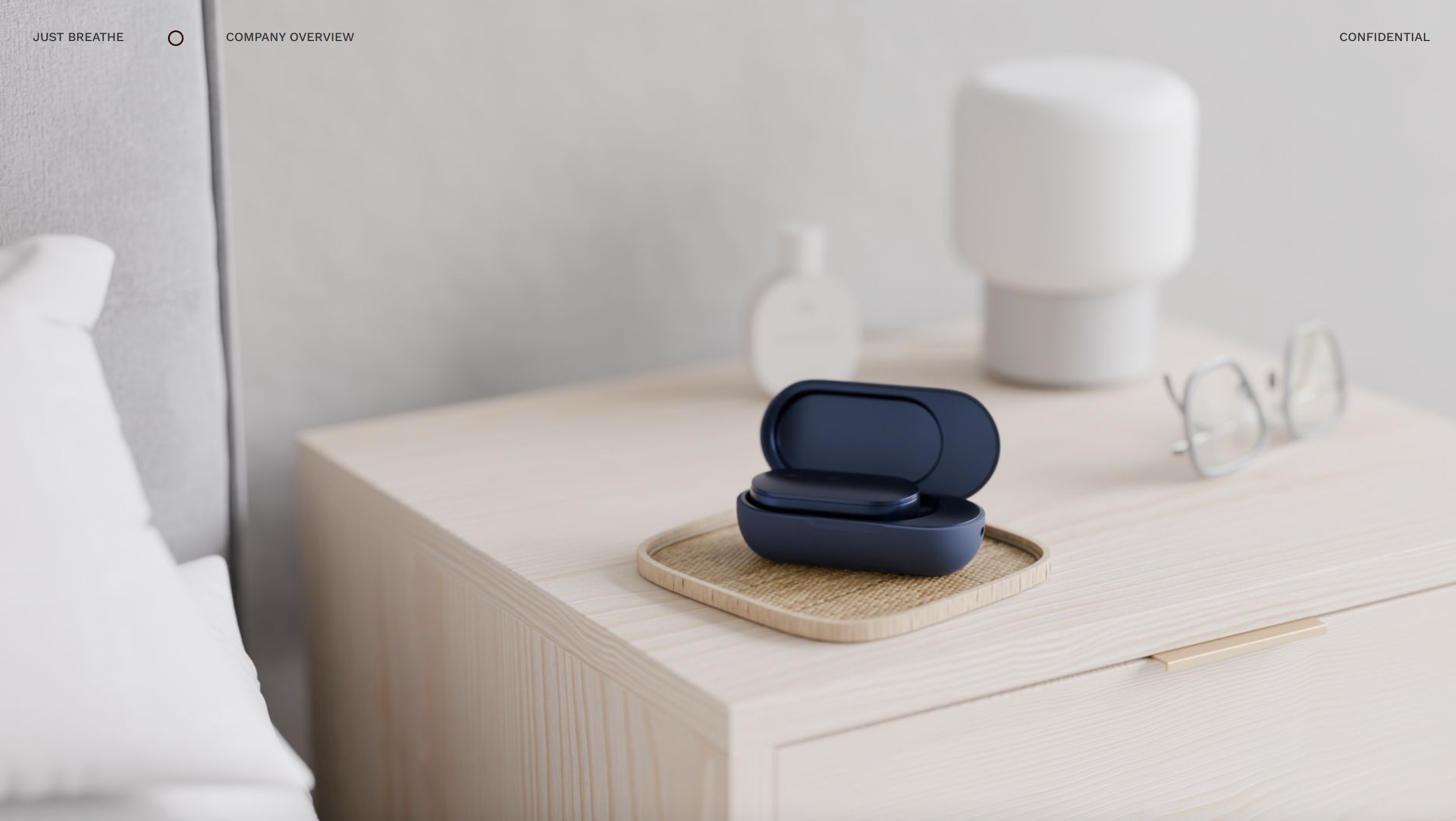
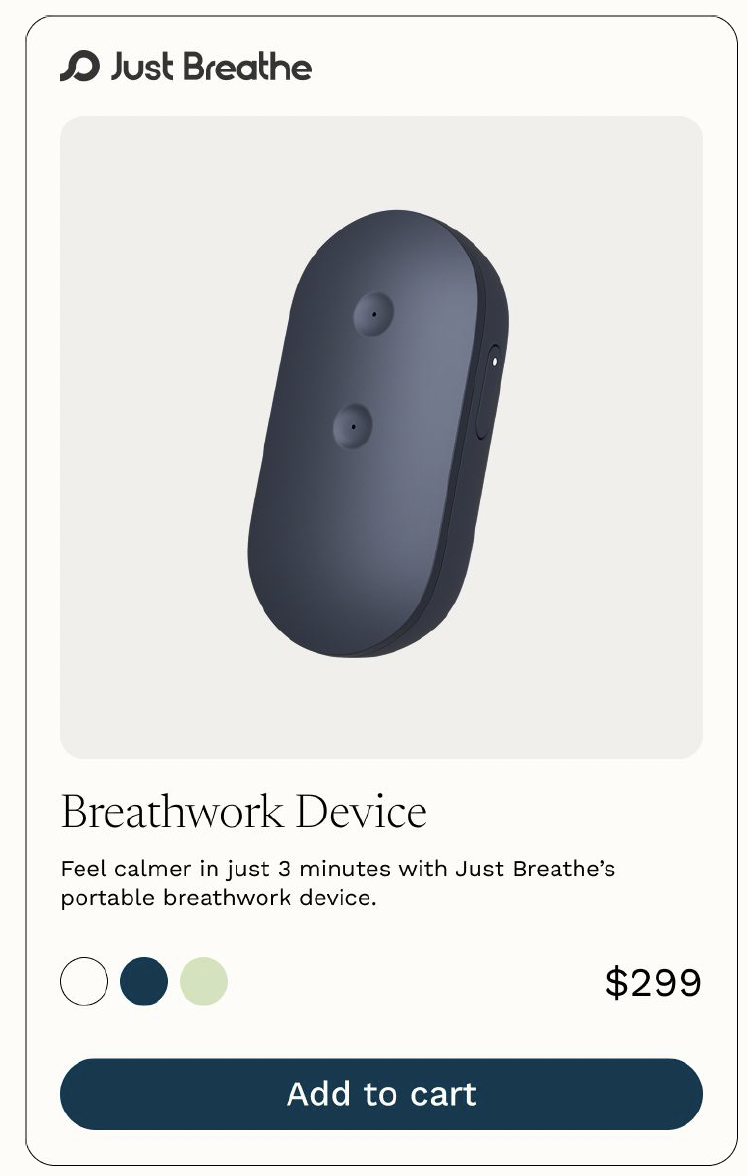
A compact oral wearable with patent-protected technology and dual-nozzle airflow cues. Passive breathing guidance with real-world usability.
Designed for Daily Use
$299
Most breathing exercises fail because they require active effort. Just Breathe removes that burden entirely — the device does the work for you.
Precision airflow cues naturally shape your inhale and exhale rhythm. The physics of the device do the guiding — your body simply follows.
Unlike apps and audio guides, there's nothing to track or remember. Breathing regulation becomes automatic — even while feeding, working, or resting.
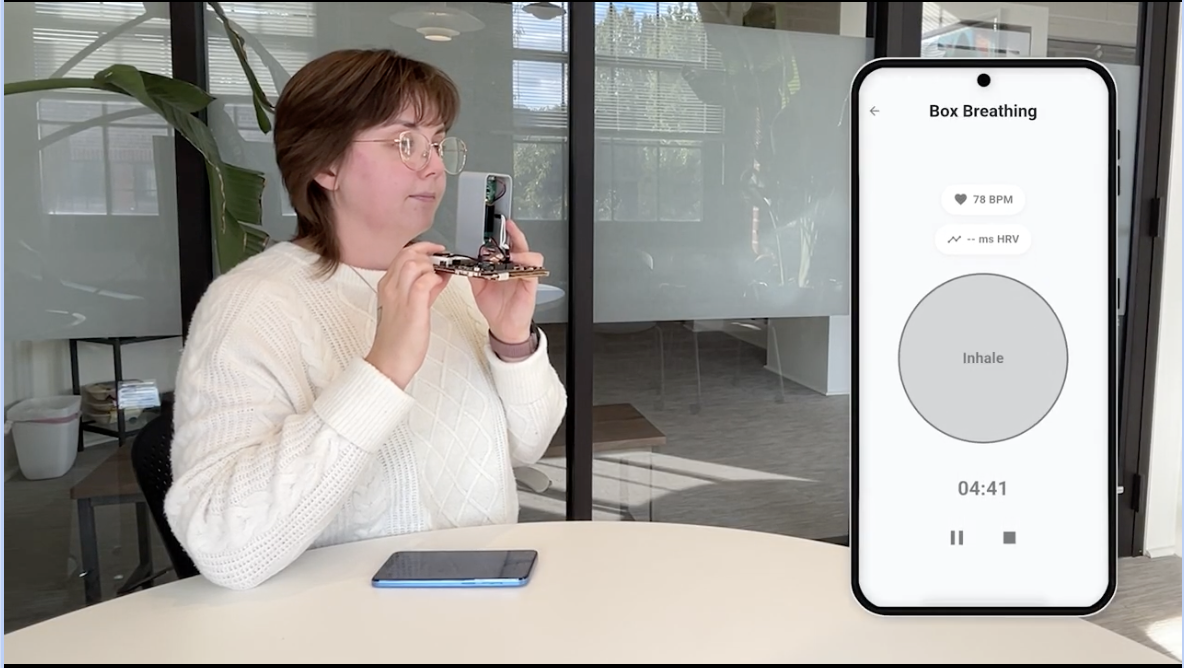
The companion app reads your HRV and breathing data live, showing stress trends and recovery progress in the moment — not just after the session.
The companion app tracks HRV and respiratory rate; these are physiological measures, not clinical outcomes.
The Bluetooth-connected app tracks HRV and respiratory rate during each session, alongside adherence metrics.
Real-time HRV + adherence tracking
Box Breathing, 4-7-8, and more
One-tap Bluetooth connection
A single-arm prospective postpartum feasibility cohort with 40 completers at Women & Infants Hospital. The results were published in JMIR Formative Research.
Our study shows the device is usable, well-tolerated, and produces the intended physiological response. It does not yet show that Just Breathe reduces anxiety more than an app, a paced-breathing timer, or usual care.
That is what we are testing next: a randomized controlled trial with 120 postpartum participants at Women & Infants Hospital, with GAD-7 as the primary outcome. We will publish the results either way.
33 of 40 postpartum participants were mostly or very satisfied with the device, a measure of acceptability rather than symptom improvement.
A 25% increase in mean HRV was observed in a single session; HRV is a biomarker, not a clinical outcome. The study found a minimal paired effect size.
Published in JMIR Formative Research as a single-arm prospective postpartum feasibility study.
Sales SK et al. "Feasibility and Acceptability of Just Breathe, A Novel Handheld Mindful Breathing Device, for Postpartum Stress: Pilot, Single-Arm Pre-Post Study." JMIR Formative Research. The cohort included postpartum participants at Women & Infants Hospital, affiliated with Brown University. n=40 completers. PMID: 41759091. DOI: 10.2196/85321
We're not trying to solve all anxiety. We're starting with the population that needs a solution most urgently — and building the evidence base to expand from there.
1 in 5 mothers experience postpartum mood disorders. Current solutions require active effort that new parents simply don't have. Just Breathe is a passive device designed around the constraints of new parenthood and studied in a peer-reviewed feasibility study.
Scalable stress management for high-burnout environments. No training required.
Adjunct tool for patients managing anxiety alongside chronic illness or long-term recovery.
Broad consumer market for daily stress regulation — the device works for anyone.
The published feasibility study included postpartum participants only. Separate market research surveyed pregnant and postpartum women about needs and preferences; it does not validate safety or clinical efficacy.
Respondents expressed interest in purchasing Just Breathe
Just Breathe fulfills a need that is currently unmet
Ranked safety as the #1 feature priority in separate market research
Would return the next day, motivated by the Calm Score
Ranked peer-reviewed evidence as a top purchase priority in market research
Want the device for parenting stress beyond postpartum
Reported positive device/app experience in market research
More likely to purchase with FSA/HSA coverage
More likely to purchase with a provider recommendation
Anticipate using the device 2–4 times per day
Average use cases selected per respondent — broad appeal
Expected retail price. Early access members get exclusive launch pricing.
Device + carrying case + companion app
Key milestones completed across the feasibility study, product development, and intellectual property.
Multiple hardware iterations built and tested with real-world postpartum users.
The feasibility study measured physiological response during a single session; it did not establish symptom improvement.
Peer-reviewed publication in JMIR Formative Research — a single-arm prospective postpartum feasibility cohort conducted at Women & Infants Hospital.
Patent-protected airflow and haptics mechanism — core IP secured.
Form factor refined for scalable production, moving from clinical prototype to commercial device.
Everything you need to know about Just Breathe, from clinical evidence to how to get yours.
Perinatal mood and anxiety disorders affect over 700,000 women each year in the U.S. alone - making PMAD the most common complication of pregnancy, yet among the least addressed.
Current solutions - breathing apps, CBT programs, medication - suffer from chronically low adherence and deliver no measurable, real-time outcomes. Women are prescribed tools they never use.
Just Breathe combines passive airflow guidance with HRV and respiratory rate tracking for postpartum recovery — a product category still taking shape.
Join the early access list - be first in line when we ship, receive exclusive launch pricing, and stay close to the science as we move from feasibility study to living room.
No spam. Unsubscribe anytime. Studied in a peer-reviewed feasibility study.
No referrals yet — share your link to move up.